
Industries
Odoo ERP for Logistics & Transportation
Logistics companies have to keep goods moving on time, across warehouses and borders, while fuel, labor, and compliance costs keep climbing. Odoo connects fleet, inventory, and supply chain data into one system built to keep pace.
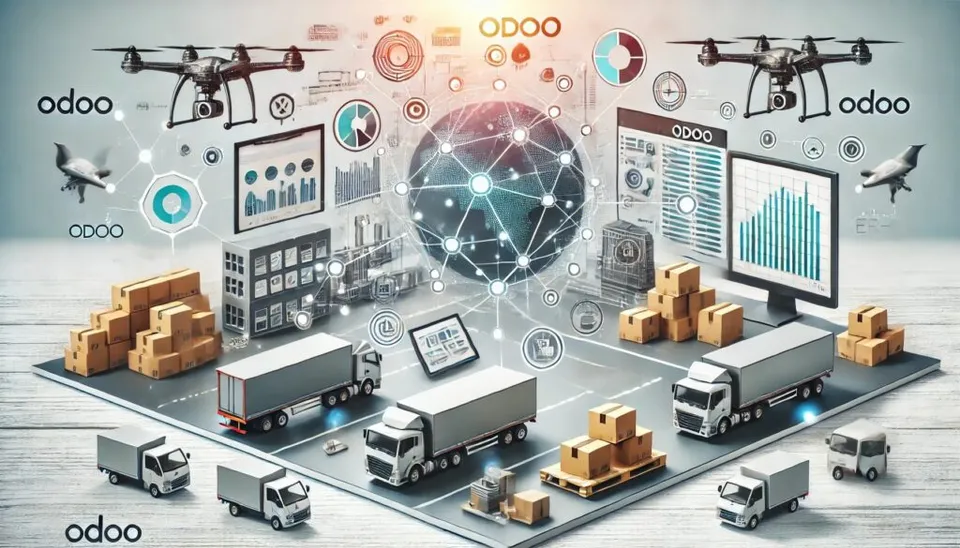
What makes logistics operations hard to run
Logistics is the backbone of global trade — goods have to flow efficiently across borders, supply chains, and warehouses. Staying competitive in that environment takes streamlined processes, real-time data, and systems that actually integrate with each other.
- Transportation management: managing a fleet, optimizing delivery routes, and ensuring timely shipments are among the biggest challenges, as rising fuel costs, vehicle maintenance issues, and unpredictable traffic all affect efficiency.
- Inventory management: managing inventory levels across multiple warehouses and distribution centers requires real-time tracking and forecasting, and overstocking or stockouts both risk unnecessary costs or missed opportunities.
- Real-time data access: logistics operations rely heavily on timely and accurate information, and without a unified platform, businesses end up with data silos that cause delays, inefficiencies, and poor decision-making.
- Supply chain visibility: logistics companies need full visibility into their supply chain to track shipments, manage suppliers, and ensure on-time deliveries — without transparency, delays or errors lead to customer dissatisfaction and increased costs.
- Regulatory compliance: the industry is subject to a variety of regulations, including customs, transportation safety, and environmental standards, and managing compliance across multiple regions and jurisdictions can be overwhelming.
- Cost control: with rising fuel prices, labor costs, and maintenance expenses, logistics companies need to constantly monitor and manage costs to maintain profitability.
How Odoo solves logistics challenges
Odoo connects fleet, inventory, supply chain, and accounting data into one platform, giving logistics companies the real-time control that disconnected systems cannot offer.
- Efficient transportation management: the Fleet Management module provides real-time tracking of vehicles and shipments, automated route optimization to reduce fuel costs and delivery times, and maintenance scheduling to avoid unexpected breakdowns.
- Streamlined inventory and warehouse management: the Inventory module gives real-time updates on stock levels, locations, and product movements, and lets companies automate stock replenishment and transfers, integrate with suppliers for smoother procurement, and track inventory across multiple warehouses and distribution centers.
- Real-time data and insights: a centralized dashboard provides real-time data across transport, inventory, and shipments, giving key performance indicators such as delivery times, stock levels, and order statuses for quick decision-making.
- Enhanced supply chain visibility: the Supply Chain and Procurement modules offer end-to-end visibility into the movement of goods, letting managers track shipments, monitor supplier performance, and manage order statuses across the entire supply chain.
- Compliance management: Odoo simplifies compliance by integrating customs documentation, invoicing, and transportation safety tracking, helping companies meet regulatory requirements across regions without manually managing complex paperwork.
- Cost control and optimization: the Accounting module tracks and manages operational costs including fuel, labor, and vehicle maintenance, with detailed reports that help identify where to cut costs and improve efficiency.
Results logistics companies have seen
Some of the outcomes logistics operators running Odoo have reported:
- A global freight company improved fleet management efficiency by 30% using Odoo's route optimization and real-time tracking features.
- A warehouse management firm reduced stock discrepancies by 25% with Odoo's automated inventory management system.
- A regional transport provider cut operational costs by 20% through Odoo's comprehensive accounting and cost-tracking tools.
Why logistics companies choose Odoo
Odoo's all-in-one ERP solution helps logistics companies improve operational efficiency and reduce costs, gain real-time visibility and control across supply chains, ensure compliance and manage regulations effectively, and enhance customer satisfaction through faster, more accurate deliveries — all from one platform that scales as the business grows.
A FEW HELPFUL ANSWERS
Frequently asked
questions.
Need to work through the specifics?
Let's talk about your project.
Can Odoo track our fleet and shipments in real time?
Yes. Odoo's Fleet Management module tracks vehicles and shipments in real time, optimizes delivery routes to reduce fuel costs and delivery times, and schedules maintenance to help prevent unexpected breakdowns.
How does Odoo help with cross-border compliance?
Odoo integrates customs documentation, invoicing, and transportation safety tracking into the same workflow as your shipments, which helps logistics companies meet regional regulatory requirements without a separate compliance system.
Does Odoo work across multiple warehouses and distribution centers?
Yes — the Inventory module supports multi-warehouse tracking with real-time stock updates and automated replenishment and transfers between locations, so you get one accurate picture instead of separate warehouse-by-warehouse counts.
YOUR NEXT STEP
Ready to get real-time control of your logistics operation?
Tell us where fleet, inventory, or compliance tracking is falling short and we'll map out what Odoo can fix.